
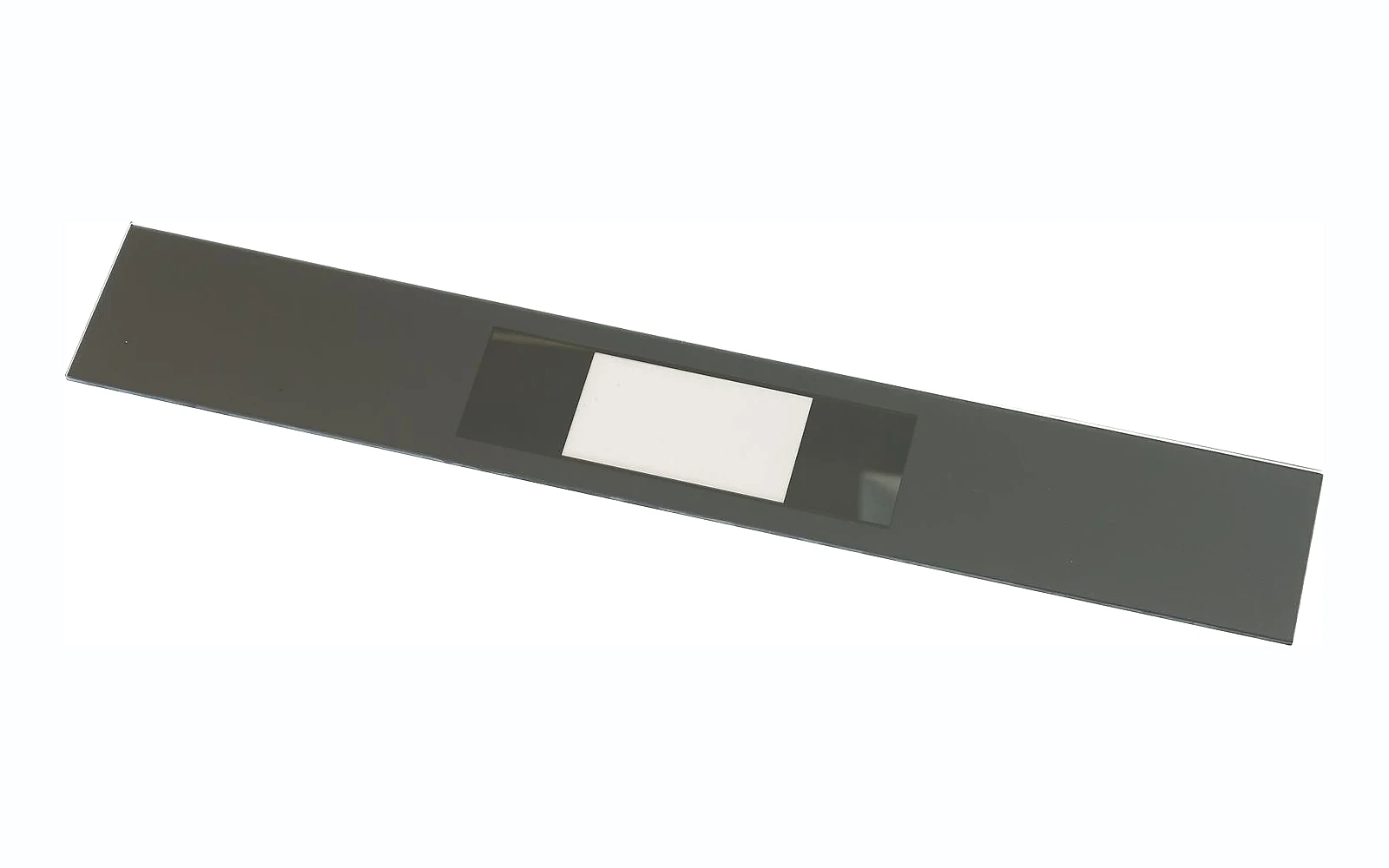
Quick answer: qualify the film on the finished surface and the real process route
The right protective film for appliance display glass must protect the approved cosmetic and optical surface without creating residue, staining, static, bubbles, print damage or excessive peel force. Selection should define the glass or coating surface, adhesive family, adhesion range, base-film properties, application method, converting operations, storage time, temperature and humidity exposure, removal stage and cleanliness requirement. Validate the complete glass–film pair through production handling, shipment and installation preparation before mass release.
Film color and thickness alone do not determine suitability. A film that works on bare float glass may behave differently on anti-glare, hard-coated, mirror-coated, ceramic-printed or polymer-laminated surfaces. The same film can also change after heat, humidity, long dwell time, pressure or ultraviolet exposure.
Official manufacturer information illustrates why application-specific qualification matters. Nitto describes optical protective films for touch panels with low-contamination, antistatic and stable-adhesion features, while its glass-coating protection data offer different adhesion levels and warn that typical values are not writing specifications. Those examples are useful engineering references, not automatic product recommendations for a particular appliance panel.
Why protective film is part of the product-quality plan
Protective film is often treated as disposable packaging. For a display or touch panel, it directly contacts the customer-facing surface and can influence downstream yield. It may remain on the glass through CNC handling, printing inspection, bonding, module assembly, warehouse storage and international shipment.
An unsuitable film can cause:
- adhesive residue visible under display illumination;
- haze or staining that changes optical appearance;
- particles attracted during peel by static charge;
- bubbles that hide scratches during outgoing inspection;
- edge lift that allows abrasive particles under the film;
- imprinting or pressure marks after stacked storage;
- excessive peel force that stresses a coating or thin assembly;
- weak adhesion that allows film movement during cutting or transport;
- ink transfer, gloss change or damage to a decorative layer;
- contamination of an optical-bonding or adhesive-bonding zone.
The control question is therefore not “Does the panel have film?” It is “Does the approved film preserve the required surface condition until the specified removal point?”
Define the protected surface first
Create a surface map for the panel. It should identify which face is customer-visible, which side carries ceramic ink, whether a display window has a coating, where bonding occurs and whether any area must remain free of film or adhesive contact.
| Surface | Main risk | Qualification focus |
|---|---|---|
| Bare glass | Scratches, particles, edge lift | Wetting, peel stability, residue, abrasion protection |
| Ceramic-printed glass | Gloss change, ink interaction | Print cure, adhesion to ink, peel damage, appearance |
| Anti-glare surface | Texture marking, haze change | Surface compatibility, pressure, residue, optical comparison |
| Hard-coated or AR surface | Coating damage, staining | Approved adhesive chemistry, low peel, humidity and dwell |
| Mirror or decorative coating | Mechanical damage, corrosion pathway | Coating-side compatibility, humidity, easy removal |
| Bonding zone | Residue affecting adhesion | Mask boundary, removal sequence, surface-energy verification |
| Optical window | Particle or haze visibility | Clean application, low contamination, ESD and illuminated inspection |
Do not assume the “back side” is low risk. The printed or coated side may later contact an adhesive, display or sensor and can be more functionally sensitive than the front.
Convert customer requirements into film specifications
Base-film material and thickness
Polyethylene, polyester, polyolefin and other films differ in stiffness, transparency, stretch, puncture resistance and converting behavior. A transparent film allows inspection without removal, but it may also make small bubbles or contamination difficult to distinguish from the glass. A colored film can identify the protected face and process status.
Thickness affects handling and protection but does not independently predict performance. A thicker film may resist puncture yet create higher edge stress or interfere with tight assembly clearances. Specify a practical range based on the product and process instead of copying a catalog value.
Adhesive chemistry
Acrylic, polyurethane, silicone and other systems have different wetting, aging, residue and static characteristics. Chemistry must be compatible with the actual surface. Supplier claims such as “low residue” should be verified on the production coating and ink because surface energy and cure state change adhesion.
Peel adhesion
Peel force must be high enough to prevent lift and movement but low enough for clean removal. Define the test substrate, dwell time, peel angle, speed, temperature and conditioning. A value measured on steel cannot automatically predict performance on coated glass.
Nitto’s current surface-protection technical data explicitly provide multiple adhesion levels for coated glass and state that substrate performance can differ. That is a good reminder to treat published properties as screening information, followed by project-specific testing.
Antistatic behavior
Display and touch assemblies can be sensitive to particles and electrostatic events. Peeling conventional film may attract fibers or dust to the freshly exposed surface. When the glass moves directly to display bonding or sensor assembly, evaluate charge during removal and the cleanliness condition after peel.
An antistatic label is not enough. Confirm the test method, conditioning humidity, film orientation and whether the effect is on the carrier, adhesive layer or both.
Optical cleanliness and residue
Residue is not limited to visible glue. It may appear as local haze, rainbow-like staining, water-break changes, contact-angle change or marks visible only with the display on. Define how the surface is inspected after removal: reflected light, transmitted light, dark-field illumination, powered display, surface-energy test or a bonding validation.
The display-glass cleanliness and contamination guide provides a zone-based approach for particles, fibers, stains and handling controls.
Map the full process route
A qualification sample should experience the real route, not a short laboratory peel immediately after application.
Record:
- where and how the film is laminated;
- glass temperature and cleanliness at lamination;
- roller pressure, speed and overlap;
- trimming, punching or laser/CNC operations after lamination;
- screen printing, curing or coating exposure if applicable;
- rack, tray or stack contact;
- warehouse time and environmental range;
- export packing and transport simulation;
- customer receiving and storage time;
- removal point, direction and operator method;
- next operation after removal.
If the film is removed before optical bonding, test the waiting interval between peel and bonding. If it stays on until appliance installation, test removal from the assembled unit without contaminating nearby gaps or damaging labels.
A staged qualification plan
Stage 1: material compatibility screening
Apply candidate films to representative finished coupons or panels. Include every relevant surface: bare glass, ink, coated window and border. Inspect immediately for wetting, bubbles, edge lift and optical change. Reject obvious incompatibilities early.
Stage 2: peel and residue after conditioning
Condition samples for the intended dwell and environmental exposures. Measure or consistently rate peel force, then inspect under agreed optical conditions. Use control samples without film and, where useful, an approved current film.
Do not define arbitrary temperature, humidity or duration in the supplier article. Customer requirements, logistics route, adhesive supplier data and the appliance qualification plan should set those conditions.
Stage 3: process challenge
Run the candidate through production-intent handling: lamination, trimming, racks, printing or coating if allowed, washing restrictions, stacking and packing. Check whether film debris contaminates equipment or whether the film stretches around holes and shaped corners.
Stage 4: module and bonding validation
After removal, perform the next real operation. For optical adhesive or structural tape, compare wetting, bond line and test results with the approved baseline. For displays, inspect powered-off and powered-on appearance. For capacitive touch, confirm that film handling and removal do not introduce particles or damage affecting the stack.
Stage 5: shipment validation
Use production packing, interleaving and orientation. After the planned transport challenge or a representative logistics trial, check edge lift, abrasion, imprint, residue and removability. Shipment inspection should record film lot, application condition and packaging condition.
Stage 6: controlled pilot release
Use a traceable pilot lot before full conversion. Obtain feedback from the downstream display factory or appliance assembly site. Record removal time, peel behavior, contamination, rejects and any cleaning needed. A film that looks acceptable at the glass factory can still create cost at the customer’s line.
Protective film and coated glass
Coated surfaces require special caution. The adhesive must not react with, stain or mechanically damage the coating. Edge lift can expose a boundary where humidity and contaminants enter. High adhesion can exceed the coating’s interfacial strength, especially after aging. A film suitable for a durable hard coat may not suit a delicate optical or mirror layer.
Ask the coating and film suppliers to review:
- coating chemistry and cure condition;
- surface roughness and surface energy;
- permitted pressure and temperature;
- maximum dwell and environmental exposure;
- peel direction, angle and speed;
- cleaning restrictions after removal;
- any excluded film or adhesive families.
Use our functional coatings for appliance glass guide to define the surface function before selecting protection.
Design details that prevent failures
Film size and edge offset
Full coverage maximizes surface protection, but excess film can wrap onto edges, interfere with fixtures or collect particles. An offset exposes a border but may leave a visible zone unprotected. Define coverage on a controlled drawing or packaging specification.
Pull tab and removal direction
A pull tab improves installation preparation and prevents tools from touching the glass. Position it away from fragile corners, displays and bonding gaps. Specify the removal direction so peel stress does not lift a coating boundary or flex a thin assembly.
Holes, windows and cutouts
Film bridges across openings can tear and leave fragments. Pre-cut film can expose the optical window. Decide whether holes are covered, punched or trimmed, and confirm that loose slugs cannot remain in the package.
Identification without third-party branding
Film printing can show part face, removal step, revision or customer handling instruction. Keep ink compatible with the process and avoid unauthorized brand marks. For a B2B supplier, traceable film lot and application date are more useful than decorative printing.
Incoming and in-process controls
Control the film as a production material:
- approved manufacturer, grade and revision;
- certificate or lot identification when required;
- roll width, thickness and appearance;
- storage temperature, humidity and shelf-life controls from the supplier;
- first-off lamination check;
- application equipment cleanliness and roller condition;
- edge alignment, bubbles, wrinkles and trapped particles;
- film lot traceability to glass batch;
- defined quarantine for expired or damaged rolls;
- change notification for adhesive, carrier, liner or manufacturing location.
Operators should not substitute a visually similar roll. A small adhesive or surface-treatment change can alter peel and residue even when the film looks identical.
Inspection without hiding defects
Film protects the surface but can also hide it. Define which inspections occur before lamination and which can occur through the film. Critical optical and cosmetic checks should normally verify the clean glass condition before film application. After lamination, check protection quality and newly introduced contamination.
If outgoing inspection relies on viewing through transparent film, correlate the result with film removed. Bubbles, film scratches and adhesive texture must not be confused with glass defects. For display windows, use production-intent illumination where the customer requirement depends on powered appearance.
Supplier–customer approval record
An effective film approval package includes:
- glass, print and coating revision;
- protected face and coverage drawing;
- film manufacturer and exact grade;
- film construction and relevant supplier data;
- lamination work instruction;
- candidate-screening results;
- peel and post-removal inspection method;
- conditioning and shipment-validation results;
- downstream bonding or display validation;
- pilot-lot feedback;
- approved boundary samples if appearance is subjective;
- change-control and deviation rules.
This record prevents a film change from being treated as an invisible packaging adjustment.
Common mistakes and better decisions
| Mistake | Risk | Better decision |
|---|---|---|
| Choosing by price and color | Unknown adhesive and surface behavior | Qualify an exact grade on the finished panel |
| Testing only immediate removal | Misses dwell, heat and humidity aging | Condition through the expected route |
| Using steel peel data as glass acceptance | Substrate response differs | Test the real glass/ink/coating surface |
| Inspecting only with the display off | Haze and residue may remain hidden | Check powered and unpowered appearance |
| Ignoring static during peel | Fresh surface attracts particles | Measure or compare removal under controlled conditions |
| Cleaning residue after every peel | Adds labor and may affect bonding | Select a low-contamination system validated after removal |
| Changing film without notification | Invalidates process and shipment evidence | Put exact film grade under change control |
| Leaving removal undefined | Customer handles parts inconsistently | Define tab, direction, stage and disposal |
FAQ
Is low-tack film always safer for display glass?
No. Very low adhesion can cause edge lift, movement and trapped abrasive particles. The correct level balances retention with clean, low-stress removal on the actual finished surface.
Can one film protect both bare and coated sides?
Possibly, but it must be tested on both surfaces. Coating chemistry, texture and surface energy can change wetting, peel and residue.
Should the protective film remain during shipment?
Often yes, but only when packaging and downstream removal are validated. Film does not replace interleaving, edge protection or load restraint. See the export packaging and shipment guide.
Does antistatic film guarantee a particle-free surface?
No. It can reduce one attraction mechanism, but room cleanliness, rollers, operator clothing, liners, packaging and peel method also contribute particles.
How should residue be checked?
Use the customer-visible and functional conditions: controlled reflected and transmitted light, powered display where relevant, optical measurements or a bonding test. Define acceptance before qualification.
What information should a buyer send for film selection?
Provide the glass, print and coating construction, protected face, required coverage, process route, dwell, environmental range, packing method, removal stage, next operation and acceptance method.
Conclusion
Protective film is a temporary material with permanent quality consequences. A robust selection links the exact film grade to the finished surface, real process route, environmental exposure, shipment, removal and next assembly operation. The result should be controlled with traceability and change notification just like other materials that touch the optical surface.
Send Tairong your panel construction, coating information, process route and packaging requirements. We can help define a film-qualification checklist and prepare sample panels for customer or display-factory validation without inventing acceptance limits that have not been agreed.