
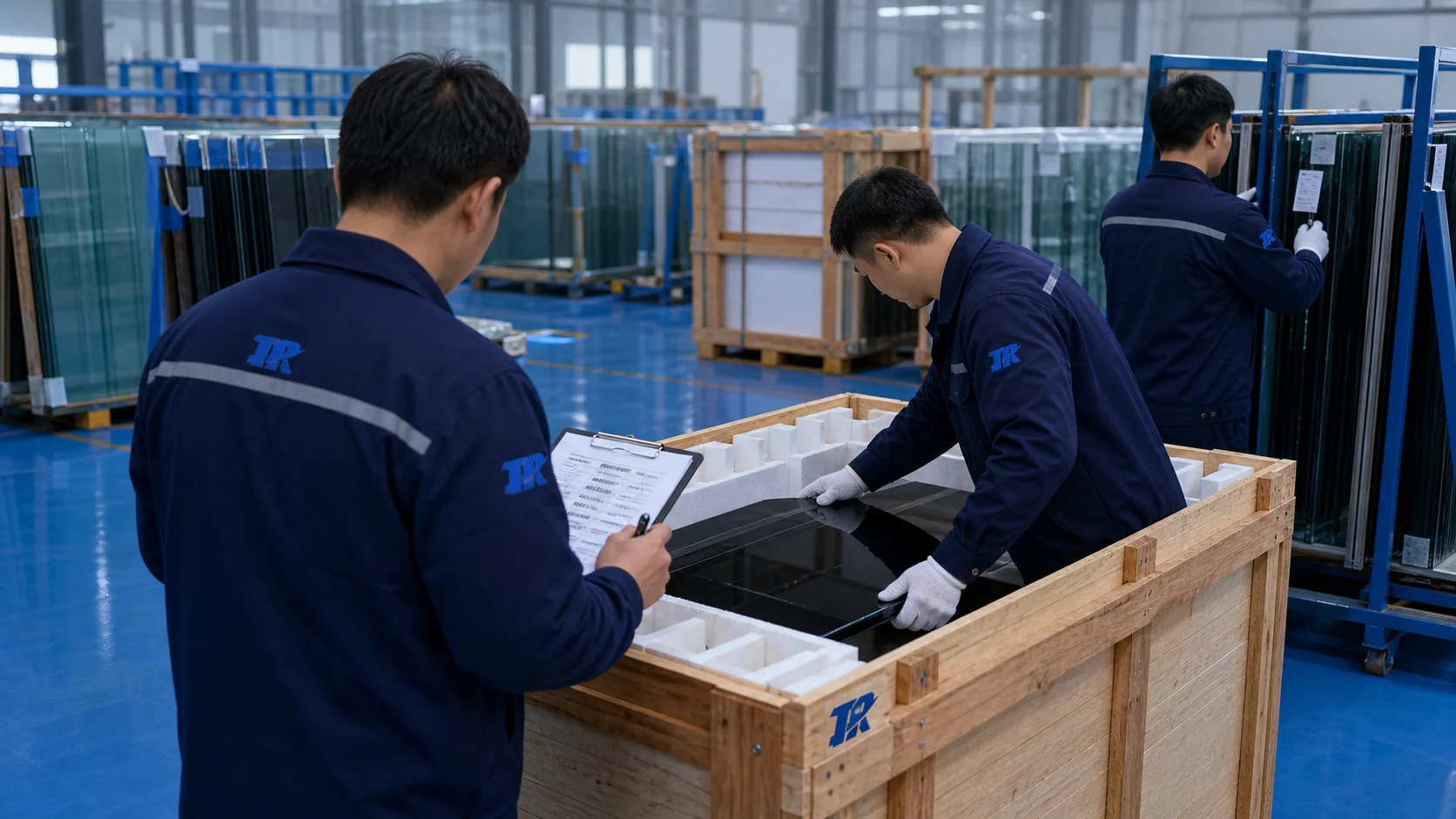
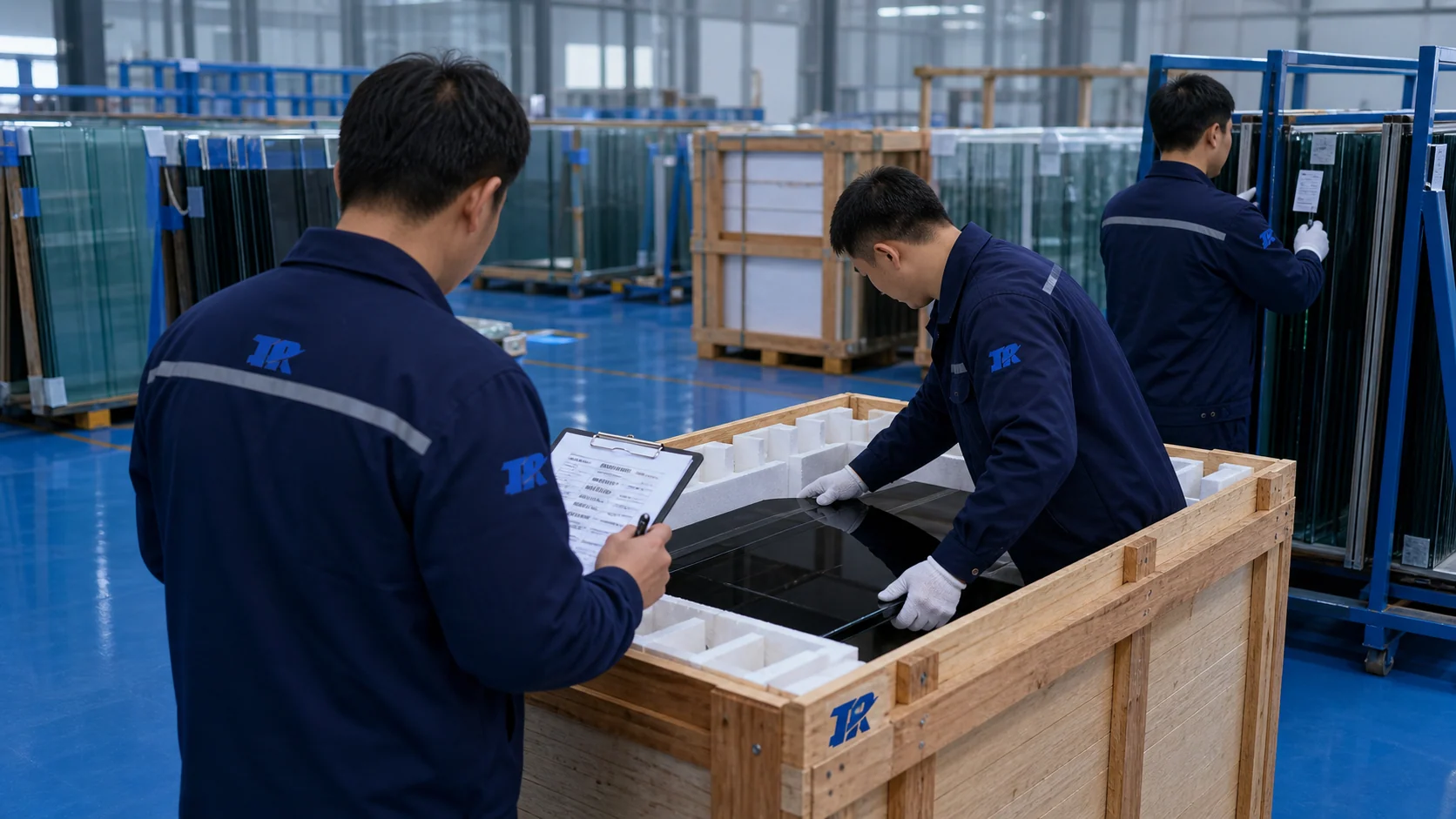



Direct answer: traceability for appliance glass should let an OEM identify which released part revision, materials, production route, inspection record and shipment lot apply to a received panel. Its main value is prevention: it stops visually similar but functionally different panels from being mixed before they reach a display factory or final assembly line.
Why similar glass can still be the wrong part
Two black panels can differ only in a print mask, coating side, window size, hole location, opacity or protective film. Those differences may be invisible in a warehouse yet cause light leakage, display misalignment, failed bonding or wrong fit at assembly. A label that says only “glass panel” cannot protect the customer from that risk.
Traceability is not a promise that a part is perfect. It is an evidence chain that makes containment, investigation and corrective action possible. It should be designed before production release, not recreated after a customer finds a mixed lot.
Define the traceability unit
Agree whether the controlled unit is a panel, tray, carton, pallet, furnace load, print batch or another practical grouping. The choice depends on risk and production flow. Individual serialization can be useful for some high-value modules, while carton- or tray-level identification may be more practical for standard decorative panels. What matters is that the scope is clear and records can be retrieved.
| Control point | Minimum record | Risk reduced |
|---|---|---|
| Released identity | part number, drawing/artwork revision, orientation | wrong version |
| Incoming materials | glass, ink, coating or film lot where relevant | unapproved substitution |
| Process route | key operation, machine/load or date reference | untraceable variation |
| Inspection release | result, inspector/system, disposition | unverified shipment |
| Packaging | pack quantity, label and destination reference | mixed cartons or missing parts |
Avoid collecting data that no one can use. A usable record has an owner, a retention period, controlled changes and a retrieval path that works during an urgent quality hold.
Make the label match the physical part and the order
The carton or tray label should distinguish part number and revision, quantity, lot/batch identifier and any customer-required handling information. If labels contain a barcode or data matrix, validate the encoded human-readable data and scanning workflow before release. A barcode is not traceability by itself; it only works when the scan links to the correct controlled record.
Use separate physical locations, label colors or status controls for different revisions. Do not depend on an operator remembering that two cartons with nearly identical labels contain different glass. Where customer confidentiality requires it, use an agreed internal code rather than printing sensitive artwork or brand information on external packs.
Prevent mixing during production, not only at shipment
The highest-risk points are setup, screen change, rework, protective-film application, inspection, packing and returns from the customer. At each point, identify the part, remove obsolete material from the area and verify the first piece after changeover. A program or artwork checksum may support this control, but a documented physical first-piece check remains important.
Rework needs special discipline. A panel that is cleaned, reprinted, relabeled or repacked should retain its original trace path plus the rework operation and new inspection result. If that cannot be controlled, segregate it rather than silently returning it to normal stock.
Create a usable hold and containment process
When a downstream factory reports a suspect panel, the first response should be factual: identify the affected part/revision, received lot, quantity, location, symptom and available photos. Then block related inventory based on the agreed traceability scope. Do not expand a hold to every product family without evidence, and do not release material simply because a label looks similar.
A cross-functional review can compare retained samples, inspection records, process changes, material lots and shipment records. This is more useful than attributing every issue to “glass quality.” For technical sampling evidence, see our PFMEA and control-plan guide.
Shipment inspection closes the chain
Before shipment, confirm part identity, revision, lot, quantity, protective condition, packaging orientation and shipping marks against the purchase order. Shipment inspection should also check that different part numbers are not sharing uncontrolled separators or cartons. Photographs can support the record but do not replace the actual check and release decision.
The export packaging guide explains how the pack protects the released condition through transport; traceability ensures the protected condition belongs to the correct product.
Buyer checklist
- Define the part number and drawing/artwork revision on the order.
- State the required lot granularity and record-retention period.
- Ask how changeovers, rework and customer returns are segregated.
- Confirm the label fields, barcode format and scan owner.
- Require notification and approval for material, artwork, print, coating or process changes.
- Align receiving checks with the lot identification on the shipment.
FAQ
Is a lot number enough?
Only when the lot record can retrieve the part revision, relevant route, release status and shipment relationship. An unexplained number does not support containment.
Should every appliance glass panel be serialized?
Not necessarily. The appropriate level depends on customer requirements, risk, production volume and the ability to preserve the identity without harming appearance or cost. Define the need before quotation.
Can a supplier use a new material without changing the label?
Not for a released construction unless the customer-approved change-control process permits it. The material and record scheme must support the agreed change notification.
What should a display factory check on receipt?
Check the label, revision, quantity, packaging condition and the characteristics that can disrupt the next operation. Use the supplier record when a discrepancy requires containment.
Conclusion
Good traceability is practical, not decorative. It establishes a clear identity at every handoff, prevents mixed material during changeovers and makes a limited, evidence-based response possible when something goes wrong. It is especially valuable for custom glass with visually similar variants.
Send Tairong your label, revision and shipment requirements to align a traceability plan with your custom appliance-glass project.