

Washing machine lid glass is a visible structural and decorative component, not simply a flat panel cut to an outline. It may carry hinge loads, support a handle or bonded frame, conceal the appliance structure, provide a viewing area and remain easy to clean throughout repeated opening, washing and maintenance cycles.
For an OEM project, those functions must be translated into a controlled drawing, artwork package and validation plan. A supplier cannot reliably select the glass, edge finish, printing system or inspection method from an overall size and product photograph alone.
This guide explains what appliance engineers and purchasing teams should define before requesting a quotation, how samples should be approved and what evidence to examine when qualifying a washing machine lid glass manufacturer.
Quick answer: what should an OEM define for washing machine lid glass?
A useful specification should state:
- Whether the glass is a top-loader lid, front-door cover, control fascia or decorative insert.
- The panel's load path, support method and exposed customer-facing surfaces.
- Base glass, nominal thickness and strengthening requirement.
- Overall geometry, curvature, holes, slots, datums and tolerances.
- Edge finish and cosmetic zones.
- Printed border, gradient, icons, display windows and approved colors.
- Hinge, handle, adhesive, gasket and frame interfaces.
- Required mechanical, chemical, environmental and appearance tests.
- Inspection conditions, traceability and approved limit samples.
- Prototype, pilot-production and export-packaging requirements.
The appliance drawing and validation plan should remain the controlling documents. A physical sample can clarify appearance, but it should not replace measurable requirements.
1. Start with the washing machine architecture
The phrase "washing machine glass" can describe several different components. Define the part before discussing price.
Top-load lid glass
A top-load lid may be framed, bonded or integrated with hinge and handle hardware. The glass can be flat or shaped and may include a transparent viewing area surrounded by a printed border. Important design questions include:
- Where is the hinge load transferred?
- Does the user press on the center of the lid?
- Is the edge fully protected by a frame?
- Can the lid twist if the cabinet is not level?
- Which side contacts detergent, water or cleaning chemicals?
Front-load door cover glass
A front-load appliance may use a decorative external cover or a component associated with the door system. The geometry, mounting and validation route can differ from a top-load lid, even when both parts are called washing machine glass.
Control or display glass
Some washer projects use a separate printed control fascia with touch icons, a dead-front display window or bonded electronics. Its most critical requirements may be print registration, optical transmission and touch performance rather than hinge loading.
SCHOTT's washer and dishwasher glass overview illustrates the range of lid, front-panel and control-panel applications. For sourcing, name the exact component and provide an assembly section so that the supplier reviews the correct function.
2. Select the substrate and strengthening condition around the assembly
The base glass, nominal thickness and strengthening process should be selected using the final assembly conditions. Relevant inputs include:
- Unsupported span.
- Position and type of load.
- Hole and cut-out geometry.
- Edge support.
- Expected impact or slam event.
- Frame stiffness.
- Product safety standard.
- Target appearance and weight.
Avoid choosing thickness from another appliance without comparing the support and load path. Two lids with the same overall dimensions can behave differently if one is fully framed and the other is supported only near the hinges.
All cutting, drilling, edge grinding and shaping should be completed before full tempering. This makes early geometry review important: a late change to a hole or notch is a new manufacturing revision, not a simple post-process adjustment.
Validate the complete lid assembly
A glass test certificate does not qualify the washer lid. The final behavior depends on the frame, hinge, adhesive, gasket, fasteners and installation process. Test production-intent glass in a representative assembly and record the revision of every interface component.
3. Control geometry from functional datums
The 2D drawing should identify:
- Overall length, width and thickness.
- Corner radii and edge profile.
- Flatness or curvature requirement.
- Hinge and handle holes.
- Slots, notches and sensor openings.
- Printed viewing area.
- Critical datums.
- Tolerances for assembly features.
Use common datums for holes and printed windows that must align with the appliance frame. Long chains of dimensions can accumulate variation even when each individual dimension passes inspection.
Request design-for-manufacturability feedback
Ask the fabricator to review:
- Hole-to-edge distance.
- Narrow glass webs.
- Sharp internal corners.
- Small radii.
- Closely spaced holes.
- Tight tolerances after edge grinding.
- Print registration around cut-outs.
- Features that require a dedicated gauge.
The objective is not to remove every special feature. It is to identify the features that drive yield, inspection time or breakage risk before tooling and samples are released.
4. Design hinge, handle and frame interfaces carefully
Glass performs well when loads are distributed and edges are protected. It is vulnerable to uncontrolled point contact, hard metal-to-glass contact and forced assembly into a distorted frame.
For each interface, document:
- Contact area and support material.
- Bushing, washer or gasket.
- Fastener type and torque.
- Adhesive type, bead location and cured thickness.
- Permitted gap and positional tolerance.
- Edge clearance.
- Assembly sequence.
During installation preparation, confirm that the frame is flat, free of burrs and dimensionally stable. A compliant gasket or adhesive layer should not hide a severe misalignment. Assembly operators also need fixtures that prevent an exposed edge from striking metal or a workbench.
Review the open and closed positions
A lid can be acceptable when closed but overloaded near the hinge at another angle. The OEM should evaluate opening, closing, stop position, accidental drop and reasonable user contact in the complete product.
If a damper or soft-close mechanism is used, record its production tolerance and aging behavior as part of the lid-system review.
5. Specify edge quality by zone
Define which edges are:
- Exposed to the customer.
- Covered by a frame.
- Used during assembly handling.
- Located near a hinge, clip or bonded bracket.
The drawing may require seamed, ground, polished, beveled or rounded edges depending on the design. A customer-facing polished edge has different appearance expectations from an edge hidden inside a polymer frame.
Cosmetic acceptance should also be zoned. A small process mark hidden beneath a gasket should not be evaluated in the same way as a scratch in the central viewing area.
6. Make printing and appearance measurable
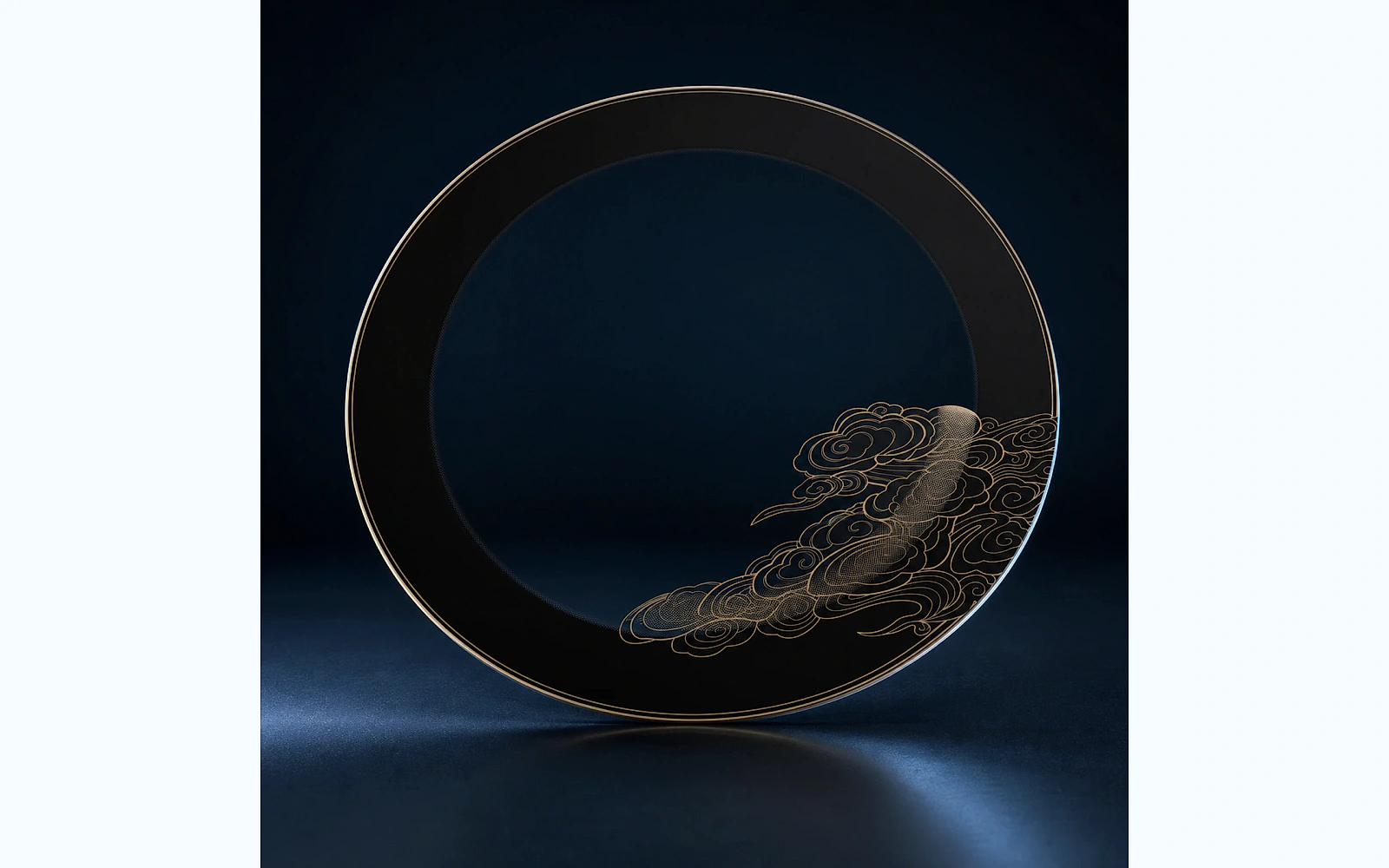
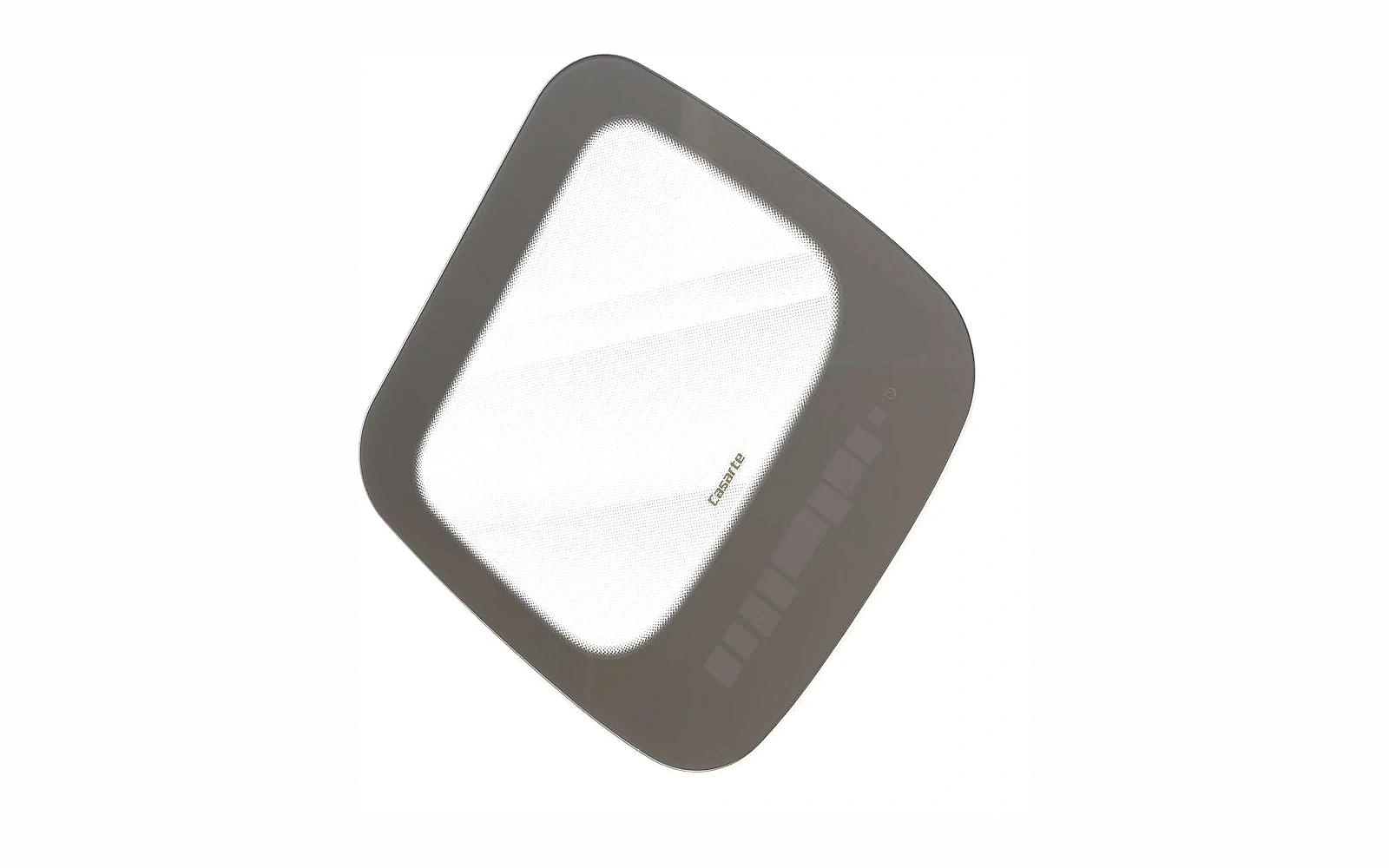
Printed washing machine lid glass can provide:
- An opaque border that conceals the structure.
- A gradient or dot pattern around the viewing area.
- Icons and operating instructions.
- A logo or decorative graphic.
- A dead-front window for a display or indicator.
- A controlled powered-off appearance.
Provide vector artwork with a revision number. Identify which side is printed and the normal viewing direction.
The print specification should define:
- Ink system and process agreed for the application.
- Color reference or approved physical master.
- Opacity requirement.
- Gloss or matte appearance.
- Registration to edges, holes and windows.
- Minimum line and text requirements.
- Pinholes, contamination and edge-bleed limits.
- Inspection lighting, distance, angle and background.
A numeric color target helps, but it does not describe the complete perception of black glass. Substrate tint, ink thickness, backing material and ambient light all affect appearance. Approve the finished glass in a representative appliance assembly.
Validate display and touch areas in both states
For a hidden display, inspect the glass with the display off and illuminated. Confirm:
- Powered-off concealment.
- Powered-on brightness and uniformity.
- Color shift.
- Icon contrast.
- Light leakage.
- Touch response, where applicable.
The optical target should match the actual display, air gap, adhesive and electronics rather than a generic transmission value.
7. Define cleaning and chemical exposure
A washer lid is repeatedly touched and cleaned. The relevant exposure may include detergent residue, water, household cleaner, skin oil and abrasion from cloths or particles.
The OEM should specify:
- Cleaners used in the target market.
- Contact time and concentration.
- Cleaning tool or cloth.
- Number of cycles.
- Acceptance criteria for gloss, color, coating and print.
Do not rely on the phrase "chemical resistant." A test method needs the chemical, concentration, temperature, duration and evaluation criteria.
If an easy-clean or anti-fingerprint surface is considered, identify the coated side and verify that it does not interfere with printing, bonding, optical performance or touch response.
8. Build an application-based validation plan
The exact plan depends on the washer architecture and target-market product standard, but a controlled program may include:
- Dimensional and gauge inspection.
- Assembly fit.
- Opening and closing cycles.
- Controlled lid-drop or slam evaluation.
- Static load or deflection assessment.
- Impact evaluation.
- Temperature and humidity exposure.
- Chemical-cleaning cycles.
- Print adhesion and abrasion.
- Appearance after environmental testing.
- Packaging and transport simulation.
Testing should use production-intent glass and representative frame components. Record the mounting method, fastener torque, adhesive cure, glass orientation and fixture.
Do not turn a sample result into an unlimited claim
A successful test validates the recorded configuration and conditions. If the hinge, glass thickness, hole geometry, frame stiffness or adhesive changes, engineering should review whether revalidation is required.
9. Approve the project in stages
Engineering samples
Confirm dimensions, edgework, holes, curvature and basic assembly fit. Record any DFM changes before appearance tooling is frozen.
Appearance samples
Approve print color, gradient, viewing area, display window and cosmetic limits under defined lighting. Create a signed master or boundary samples.
Functional samples
Complete the lid-system tests using representative hinges, frames, adhesives and electronics.
Pilot production
Use production-intent tooling, work instructions, inspection fixtures and packaging. Review process repeatability and line-side handling before mass-production release.
Each approval should refer to the current drawing and artwork revision. A sample without revision traceability can create confusion when production begins.
10. Audit the supplier's controls, not only the sample
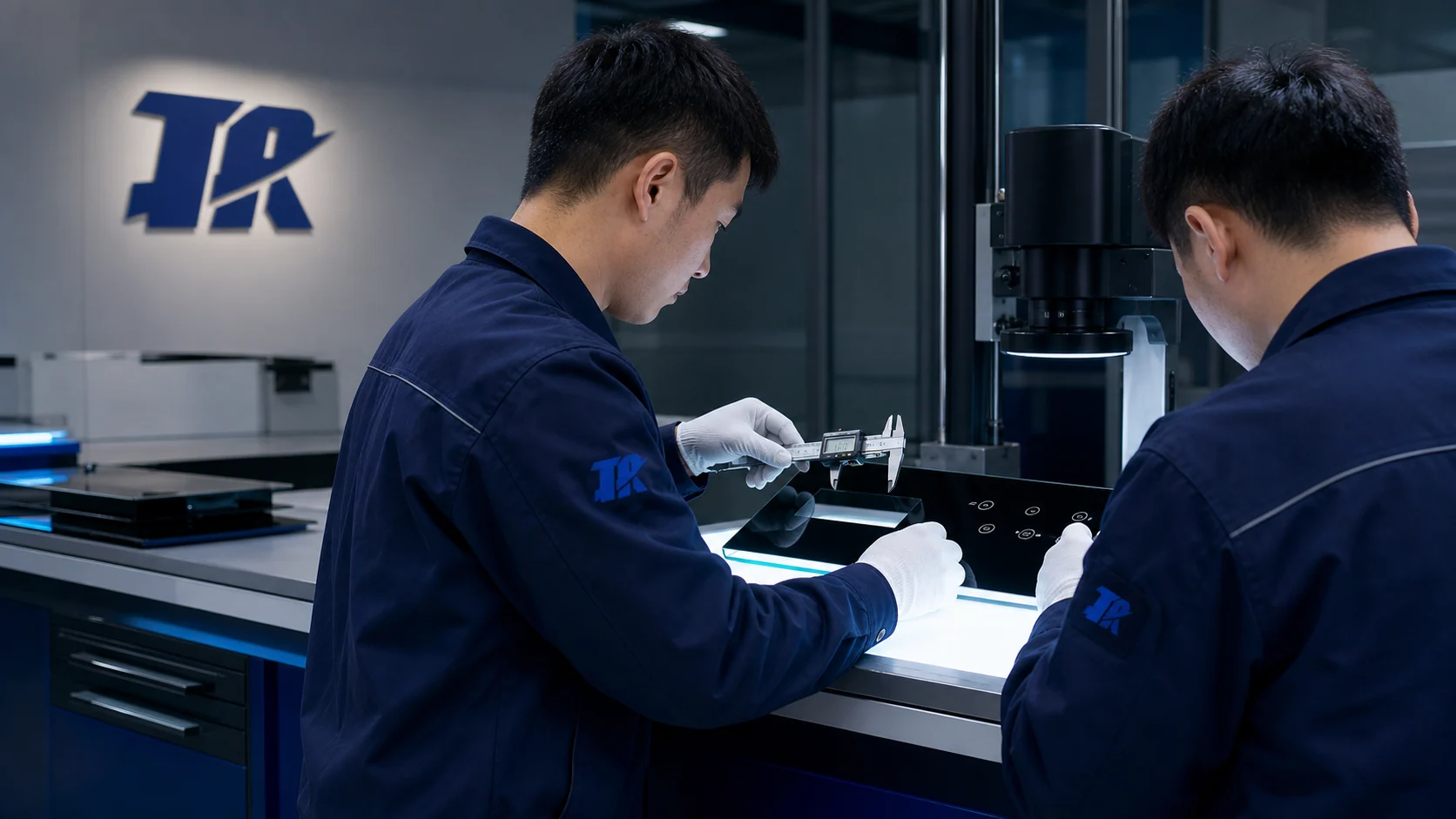
A polished sample does not prove repeatable production. During supplier qualification, examine how the manufacturer controls:
- Incoming glass and consumables.
- Drawing and artwork revisions.
- CNC cutting, drilling and edge processing.
- Tempering parameters and batch traceability.
- Printing screens, inks and color masters.
- First-piece and in-process inspection.
- Nonconforming material.
- Final inspection and shipment release.
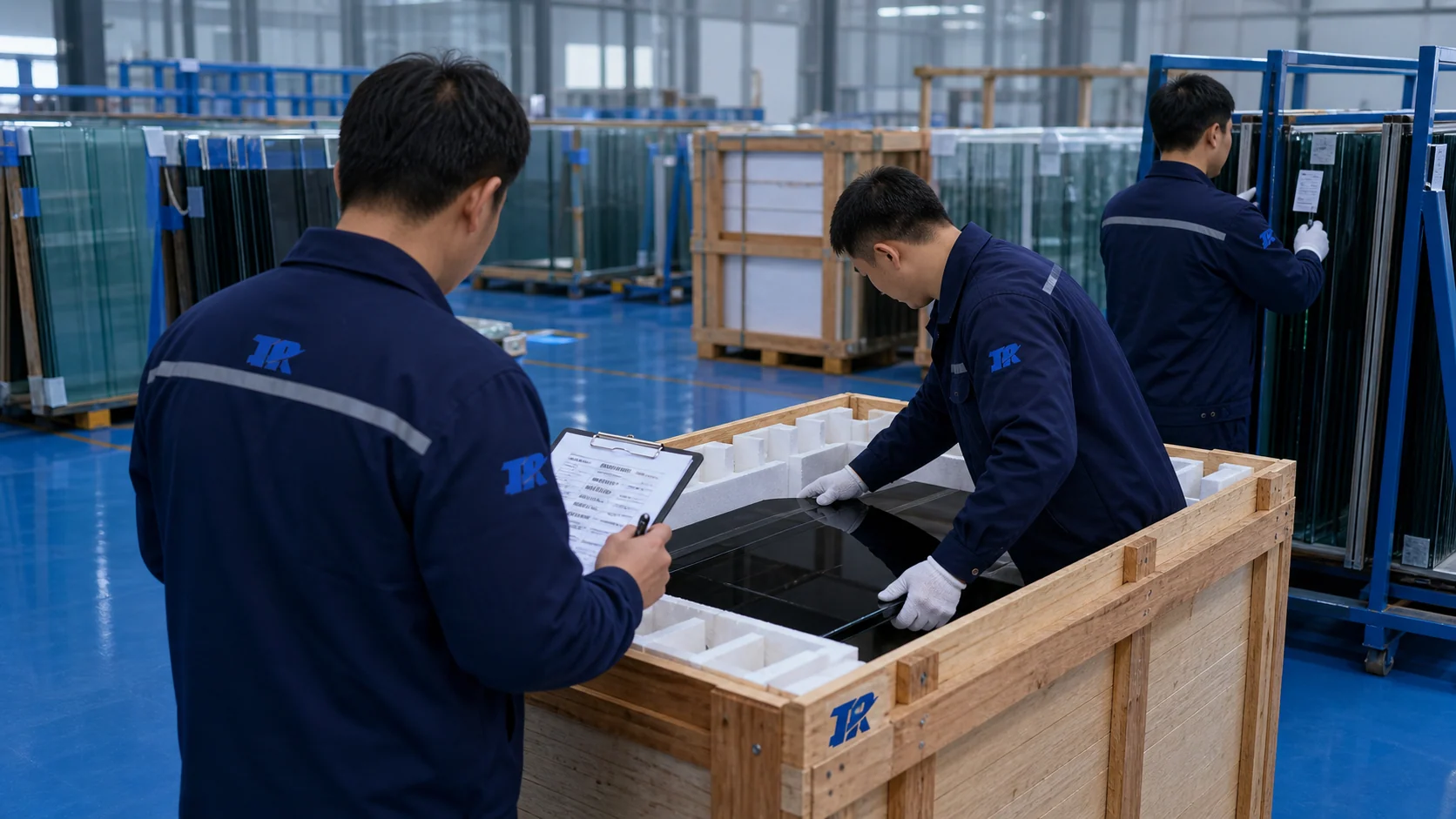
- Protective film, interleaving and export packaging.
Ask for records from a comparable process, with confidential customer information removed. The objective is evidence that the factory can maintain the agreed specification after the sample team hands the project to production.
Shipment inspection should verify part number, revision, quantity, appearance status, label and packaging condition. Protect glass surfaces from abrasion and glass edges from concentrated impact during transport.
Washing machine lid glass RFQ checklist
Send the supplier:
- Controlled 2D drawing and assembly cross-section.
- Part position and functional description.
- Base material, thickness and strengthening requirement.
- Hinge, handle, frame, gasket and adhesive details.
- Artwork and color reference.
- Display or touch requirements.
- Cleaning and environmental conditions.
- Product-level validation requirements.
- Prototype quantity and estimated production volume.
- Destination and packaging requirement.
- Required inspection reports.
Ask the supplier to return:
- DFM comments.
- Manufacturing route.
- Open technical questions.
- Sample stages and timing.
- Inspection assumptions.
- Packaging proposal.
- Quotation basis and exclusions.
FAQ
What is the difference between washing machine lid glass and door cover glass?
Lid glass commonly refers to a top-load closure with hinge and opening functions. Door cover glass can refer to a decorative or structural component on a front-load door. The drawing and assembly should identify the exact position and load path.
Can a washing machine lid use a printed gradient around the viewing area?
Yes, if the artwork, ink system, registration, opacity and inspection method are agreed. The gradient should be approved on finished glass under representative lighting.
How should hinge holes be specified?
Control their size and position from functional datums and show the complete bushing, fastener and frame interface. The glass fabricator should review hole-to-edge distance and local geometry before tempering.
What samples should an OEM approve?
Use separate engineering, appearance and functional samples where practical, followed by a pilot run. This prevents an early cosmetic sample from being mistaken for full assembly validation.
What proves that a supplier can support repeat production?
Review revision control, process records, inspection fixtures, traceability, nonconformance handling and shipment release. A good sample is necessary, but repeatable controls are what protect mass production.
Conclusion
A stable washing machine lid glass program begins with the appliance architecture and load path. Define how the glass is supported, opened, cleaned and viewed. Control the geometry, edge zones, printing and interfaces in measurable documents, then validate the complete lid assembly.
For purchasing teams, this produces quotations that can be compared on the same basis. For engineering teams, it reduces late changes between attractive samples and production-ready parts.
CTA: Request a washing machine glass manufacturing review
Developing a top-load lid, front-door cover or washer control panel? Send Tairong your drawing, assembly section, artwork, validation conditions and target volume. Our team can review the information required for sampling and quotation.
Primary CTA: Send Your Requirements
Related products: Custom washing machine glass
Planning your RFQ: OEM appliance glass RFQ checklist